This piece was originally published at Women at the Center, and is cross-posted with permission.
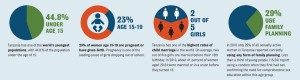
Half of the world’s population is under 30 and half of all new HIV infections are happening to people between the ages of 15 and 24. As a 24-year-old with many peers in this age group, I wonder, how many of my girl friends (and guy friends) have been asked what they need as far as reproductive and sexual health goes? I have gone to Planned Parenthood and youth centers in the past and not once have I been asked, “How can these services be more accessible?” or “What did you have to go through to get these services?”
Recently I tried making an appointment to get sexually transmitted infection (STI) tests done for my good friend and myself in Boulder, Colorado. She had never been tested and was scared, so I offered to go with her for support. As we tried to make appointments, I soon realized it was ridiculously difficult to get these basic tests done. We are both covered under our parents’ insurance, however, our parents live in other states and the insurance wouldn’t cover us in Colorado. This meant we had to pay more than $250 out-of-pocket to get tested. Another (so-called) option was to drive to Denver and go to the free clinic—but only on Mondays and Wednesday between 2-5 p.m. As it turned out, this was not an option for us because it interfered with school and work.
To make matters more frustrating, my friend and I are students at a progressive university, which should offer students reproductive health services, but doesn’t. In fact, the only thing that is offered at my school is a student-led discussion group about safe sex.
This experience led to my conclusion that even though there are some existing options, they aren’t accessible or affordable enough for people in my age group. This is especially concerning because Boulder is supposedly a progressive and health-oriented city, yet it lacks the socioeconomic diversity (or maybe the political will?) to offer free or inexpensive services. While doing my undergraduate studies in Chicago, my college, Columbia College of Chicago, offered free STI testing to the entire student population every month. So what does this say about how we need diversify family planning and sexual and reproductive services?
The Wilson Center recently posted an article, “What’s Youth Got to Do With It?” which discusses the absolute necessity of engaging young people in developing family planning and reproductive health services. Author Heather Randall says, “Failing to address youth sexual and reproductive needs has tremendous impacts on communities and families.” In order to address our needs, I think family planning programs and services need to listen to the younger generation’s voice. After all, only we know what we need and what limitations we face when getting sexual and reproductive health care.
And keeping diversity in mind, these programs must see that young people are not “one entity,” as Dr. Catherine Baye of the International Youth Alliance on Family Planning puts it. Within these young generations are girls and boys, young women and young men, who have unique needs and unique limitations. In order to create effective programs, voices from both of these groups are needed.
The effects of focusing on this population could be amazing. Alisa Mautner Cameron, deputy director of USAID’s Office of Population and Reproductive Health says in the Wilson Center article that, “When we enable…young women (and men) to delay their first pregnancy through voluntary family planning programs, they can stay in school longer, join the workforce, and raise a healthier family.” This of course leads to more stable communities and economies. To adequately invest in the youth, Cameron points out, there needs to be a “high level of global coordination.”
Across the globe, family planning programs need to re-evaluate how they are reaching young people and whether or not that outreach is effective. Getting involved with schools at all levels, and working to make services affordable if not free, are steps to make family planning and sexual and reproductive health more inclusive for the young. The millennial generation (people born from roughly 1982 to 2004) and “generation Z” (people born from roughly 2005 to the present day) are shaping the future of the world’s economy; there is no doubt that we will shape other systems as we move forward into the future.
To ensure that sustainable development plans stay on track with the needs of our generation and to ensure the success of family planning and reproductive health programs, we must create dialogue and seek the knowledge and guidance young people have to offer.
Jade Begay, of the Tesuque Pueblo and the Navajo Nation, is a Communications Fellow at Resource Media, a filmmaker, and a student in the Masters of Environmental Leadership program at Naropa University.